

One of the best things you can do to improve your Instagram feed is to upgrade your camera. Whether you’re outgrowing your smartphone or looking for your first mirrorless body, here are the best cameras for Instagram in 2026.
The camera market has shifted almost entirely to mirrorless. Canon, Nikon, and Sony have all stopped developing new DSLRs, and new lenses are mirrorless-only. That’s good news for Instagrammers: mirrorless cameras are smaller, lighter, and packed with features like fast autofocus, 4K video, and wifi transfer that make the phone-to-feed workflow simple.
We’ve tested and researched cameras across every price range. Things like weight, price, image quality, and video capabilities vary between these picks, so review all of the options before choosing. Investing in the right camera now can serve you for years.
Best Cameras for Instagram
- Canon EOS R50 – Best Entry-Level Camera for Instagram
- Nikon Z50II – Best Mid-Range Mirrorless Camera
- Sony a7C II – Best Compact Full-Frame Camera
- Smartphone Camera (iPhone/Pixel/Galaxy)
- Canon EOS R6 Mark III – Best Pro Camera for Instagram
- DJI Osmo Action 5 Pro – Best Action Camera for Instagram
- DJI Osmo Pocket 3 – Best Camera for Reels
Canon EOS R50 – Best Entry-Level Camera for Instagram
The Canon EOS R50 is the easiest step up from a smartphone. At around $680 for the body ($800 with the 18-45mm kit lens), it delivers image quality that will immediately set your feed apart.
Built around a 24.2-megapixel APS-C sensor, the R50 uses Canon’s Dual Pixel CMOS AF II system for fast, reliable autofocus with eye, face, and animal detection. It shoots at 12fps with the electronic first curtain shutter (15fps with the full electronic shutter), so you won’t miss fast-moving moments. Video shooters get oversampled 4K/30p from 6K, which produces clean, detailed footage.
The vari-angle touchscreen flips forward for selfies and folds against the body for protection in your bag. Built-in wifi and Bluetooth let you transfer photos to your phone through Canon’s Camera Connect app, so you can edit and post from anywhere.
Canon discontinued their older EOS M mirrorless system, so the R50 is now the gateway into Canon’s RF mount ecosystem. That matters because RF lenses are where Canon puts all their new development. If you start here and upgrade later, your lenses move with you.
For anyone on a tighter budget, the Canon EOS R100 (~$480) cuts a few features (no flip screen, no touchscreen, slower burst) but still delivers great image quality using the same RF mount.

- Compact, lightweight RF mount camera with a 24.2 Megapixel CMOS (APS-C) sensor and DIGIC X processor.
- 4K uncropped movie with Dual Pixel CMOS AF II at up to 30 fps oversampled from 6K and Full HD High-frame rate movie at up to 120 fps. Movie for Close-up Demo Mode quickly switches focus when a product is brought close to the camera.
Nikon Z50II – Best Mid-Range Mirrorless Camera
The Nikon Z50II (~$910 body, ~$1,097 with the 16-50mm kit lens) sits in the sweet spot between entry-level and pro. It borrows the EXPEED 7 processor from Nikon’s flagship Z8 and Z9, which gives it autofocus performance you wouldn’t expect at this price.
With 209 phase-detect autofocus points and automatic subject detection for nine categories (people, animals, vehicles, and more), the Z50II locks focus quickly and tracks accurately. Burst shooting hits 30fps, making it one of the fastest cameras under $1,000.
The 20.9-megapixel APS-C sensor handles low light well, and Nikon’s color science produces natural skin tones that look great on Instagram without heavy editing. Video specs include 4K/30p oversampled from 5.6K for sharp footage.
The fully articulating rear LCD flips forward for vlogging and selfies, and the improved deep handgrip makes the camera comfortable to hold for long shoots. Wifi and Bluetooth are included for wireless image transfer through Nikon’s SnapBridge app.
If you already know you want Nikon and prefer something purely for video and content creation, the Nikon Z30 (~$710) drops the electronic viewfinder in favor of a screen-only design built for vloggers.

- Go Beyond Your Phone: Capture lifelike colors and incredible details from dawn to dusk thanks to a superior 20.9-megapixel DX format (APS-C size) sensor several times larger than that of a typical smartphone, but still lightweight and compact enough to fit in a small bag.
- Find Your Aesthetic: At the press of the Picture Control button, choose from 31 built-in presets designed to make your photos and videos stand out. Create and save your own Picture Control presets or download bespoke Cloud Picture Controls directly to your Z50II from Nikon Imaging Cloud. Play with results in real-time as you shoot and open up a world of creative possibilities.
Sony a7C II – Best Compact Full-Frame Camera
If you want the highest image quality possible in a portable body, the Sony a7C II ($2,199 body) is the best camera for Instagram. It packs a 33-megapixel full-frame sensor (the same as the a7 IV) into a body that weighs just 514 grams. That’s small enough to carry all day without fatigue.
Full-frame cameras have larger sensors than APS-C models, which means better low-light performance, more dynamic range for editing, and that natural background blur (bokeh) that stands out in feeds. The a7C II adds AI-enhanced Real-Time Eye AF for people and animals, plus 7-stop in-body stabilization that keeps handheld shots sharp even in dim conditions.
Video capabilities are strong: 4K/30p oversampled from 7K, 4K/60p in Super 35 mode, and 10-bit 4:2:2 color for serious color grading. The fully articulating touchscreen and built-in wifi make the edit-and-post workflow quick.
Sony’s E-mount system has the largest selection of full-frame mirrorless lenses on the market, including their high-end G Master line. If you’re into travel photography, the a7C II’s compact size and full-frame quality make it easy to throw into a bag and forget it’s there until you need it.
When I decided to purchase a “big-girl” camera I went to the Sony α7R II. I have never been disappointed either. The α7RII has an incredibly powerful 42mp sensor so shooting in RAW brings out every colorful detail of your picture. The G Master lenses are expensive, but worth the investment. My favorite all around city lens is the GM 16-35mm. It is my “go to” lens. The high ISO is crazy good (I’ve taken at 12,800 ISO) and thanks to its amazing pixel count, what noise there might be, is hidden. Its viewfinder is great, and the camera itself is comfortable to hold. It’s sturdy and well made. I have never regretted my choice.
@dccitygirl
The a7C II carries forward everything @dccitygirl loves about Sony’s full-frame line in an even smaller body. If budget is a factor, the Sony a7 IV (~$1,998) has dropped in price since the a7 V launched and remains an excellent full-frame option.
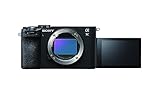
- Incredibly compact and lightweight, packed with full-frame performance
- 33.0MP full-frame Exmor R CMOS sensor
Smartphone Camera (iPhone/Pixel/Galaxy)
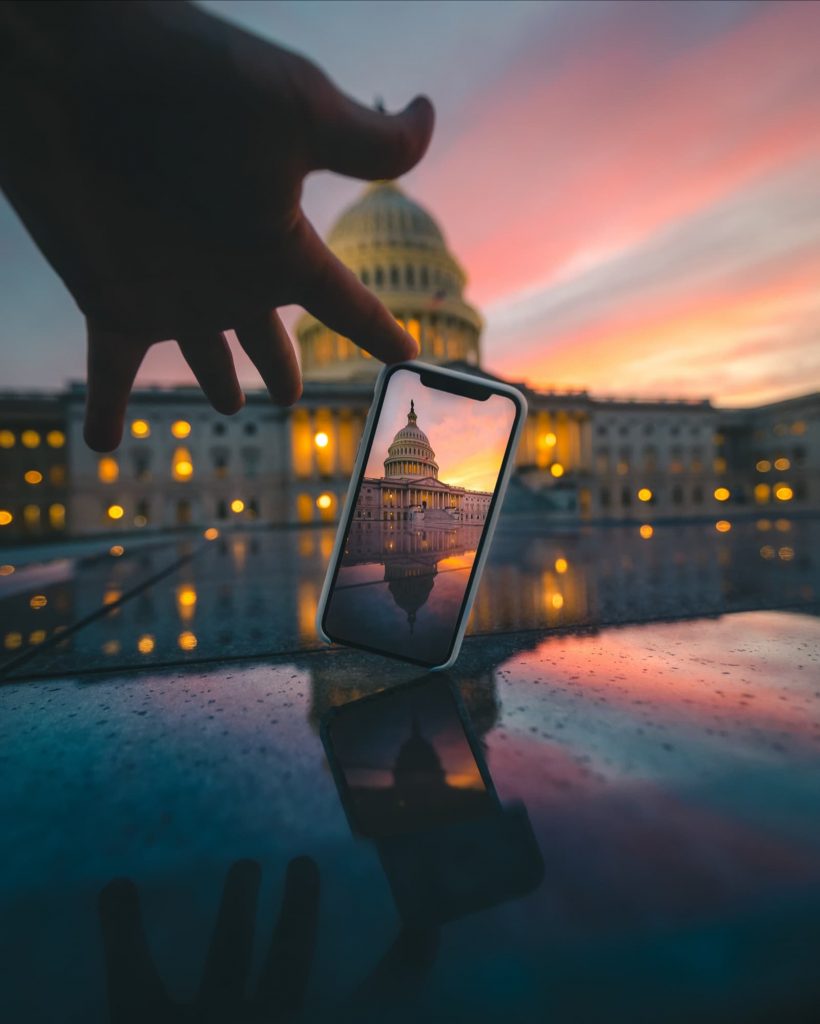
If you’re on Instagram, you already have a great camera in your pocket. The best smartphone cameras in 2026 produce results that rival dedicated cameras in good light:
- iPhone 17 Pro: 48MP triple-lens system, ProRes video, Cinematic Mode, and the smoothest phone-to-Instagram workflow on any device. AirDrop makes transferring to other Apple devices instant.
- Google Pixel 10 Pro: Google’s computational photography produces the most Instagram-ready images with the least effort. Night Sight remains the best low-light mode on any phone, and the price (~$999) undercuts Apple and Samsung.
- Samsung Galaxy S26 Ultra: A 200MP main sensor with an f/1.4 aperture for the best low-light phone photos. Also has the longest zoom range (up to 100x with AI-enhanced zoom).
Phone Lenses: If you want to extend your smartphone’s capabilities, Moment lenses are still the premium option. Their newer T-series line works with current phones and adds wide-angle, telephoto, and macro options. It’s a great way to make your Stories and Reels more dynamic with a wider field of view.
Editing Apps: We recommend Lightroom, Snapseed, and VSCO for mobile editing. The filters and tools built into Instagram have also gotten quite good. Learning to edit well will improve your photos regardless of what camera you use.
Shooting RAW on Mobile: You can take more control over your mobile photography by shooting in RAW format. Apps like Lightroom and Halide let you capture RAW files that give you far more editing flexibility than standard JPEGs. iPhone Pro models and recent Pixels both support RAW capture natively. If you’re serious about mobile photography, RAW is the single biggest quality improvement you can make. Be sure to also check out our Instagram image size guide so your photos are cropped to the right dimensions before posting.
Canon EOS R6 Mark III – Best Pro Camera for Instagram
For photographers who want the best Canon has to offer, the Canon EOS R6 Mark III ($2,799 body, released November 2025) is a powerhouse. Its 32.5-megapixel full-frame sensor captures outstanding detail, and the autofocus system is fast enough to track anything from birds in flight to street scenes.
Video capabilities are overkill for Instagram in the best way: 7K internal RAW recording gives you massive flexibility to crop and reframe footage for different aspect ratios (perfect for repurposing content across Stories, Reels, and feed posts). Burst shooting hits 40fps with a 20-frame pre-capture buffer, so the camera starts saving frames before you fully press the shutter.
Canon’s RF lens ecosystem has matured rapidly, with over 40 native lenses available. Their high-end L-series lenses (the ones with the red ring) are weather-sealed and built for professional use. The camera body itself features 8.5-stop in-body stabilization and a fully weather-sealed build, so rain and snow won’t be a concern when you’re out shooting at DC’s most Instagrammable locations.
Canon also makes the Canon EOS R8 (~$1,499), which shares the same RF mount in a lighter, more affordable full-frame body. It trades some pro features (no IBIS, single card slot) for a much lower price.

- 32.5MP full-frame CMOS Image Sensor and DIGIC X Image Processor.
- Up to 40-fps Photo Shooting with 20-frames of pre-continuous shooting.
DJI Osmo Action 5 Pro – Best Action Camera for Instagram
If you’re capturing outdoor adventures, sports, or anything where a full-size camera isn’t practical, the DJI Osmo Action 5 Pro (~$349) delivers the best value in action cameras right now.
The standout spec is the 1/1.3-inch sensor (40MP), which is significantly larger than the GoPro HERO13’s 1/1.9-inch sensor. Larger sensor means better image quality, especially in low light. Battery life is also dramatically better at roughly 4 hours compared to about 70 minutes on the GoPro. That alone makes it the more practical choice for all-day shoots.
RockSteady 3.0 stabilization with 360-degree horizon leveling keeps footage smooth through any activity. The camera is waterproof to 20 meters without a case, and dual touchscreens (front and back) make framing easy in any situation. Built-in wifi transfers clips to your phone for quick editing and posting.
The GoPro HERO13 Black (~$400) still leads in extreme-action stabilization (HyperSmooth 6.0) and has a unique interchangeable lens system. But for most Instagram content creators, the DJI’s better battery life, larger sensor, and lower price make it the smarter buy.

- Capture Urban Nightscapes – Osmo Action 5 Pro features a new 1/1.3″ sensor for stunning low-light. Great for nighttime biking adventures in dark environments.
- Enhanced Subject Tracking – 4nm Chip for fast, reliable framing. Keep fast-moving subjects centered. [7] The 4nm chip ensures smooth and fast framing in 16:9 or 9:16.
DJI Osmo Pocket 3 – Best Camera for Reels
The DJI Osmo Pocket 3 (~$519) is a wildly popular camera among Instagram and TikTok creators, and for good reason. It’s a 1-inch sensor camera with a built-in 3-axis mechanical gimbal, and the whole thing fits in your pocket.
The gimbal produces buttery-smooth video that no software stabilization can match. It shoots 4K/120fps for slow-motion content and has a 2-inch rotatable AMOLED touchscreen that switches between horizontal and vertical shooting. For Reels and Stories, you just rotate the screen and start recording in 9:16 without any cropping.
If your Instagram strategy leans heavily toward video content (Reels, Stories, behind-the-scenes clips), the Pocket 3 is the most efficient tool for the job. It’s not a replacement for a mirrorless camera for stills, but for video-first creators, nothing else this portable produces this quality.
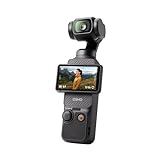
- Capture Stunning Footage – This vlogging camera features a 1-inch CMOS sensor and records in 4K resolution at an impressive 120fps. Capture breathtaking night views and sunsets with enhanced clarity.
- Effortlessly Frame Your Shots – Get the ideal composition with Osmo Pocket 3’s expansive 2-inch touch screen that rotates for both horizontal and vertical shooting.
Choosing Your First Lens
If you’re starting out, the kit lens bundled with your camera is a solid place to begin. Kit lenses cover a useful range of focal lengths (typically 18-45mm or 16-50mm on APS-C cameras) for everyday photography.
After learning how your camera works with the kit lens, we recommend upgrading to a 50mm prime lens. Most camera companies sell an affordable 50mm for around $100-250, and the jump in image quality is significant. Prime lenses have wider maximum apertures (lower f-numbers), giving you more control over depth of field. That’s how you get the soft, blurred backgrounds that stand out in portrait photography.
Once you figure out your style, additional lenses can expand your capabilities. Wide-angle lenses (~16-24mm) are great for landscapes, architecture, and cityscapes. Short telephoto lenses (~85mm) are ideal for portraits. A versatile zoom like a 24-70mm covers most situations in a single lens.
Keep in mind that lenses aren’t interchangeable between brands (without adapters). So consider the lens ecosystem before committing to a camera system. Sony’s E-mount currently has the largest third-party lens selection, while Canon’s RF mount is growing fast. To calculate how a lens will look on a crop-sensor camera, use a crop factor calculator since focal lengths are typically listed for full-frame cameras.
Other Photography Gear for Instagrammers
After getting a camera, here are some accessories that can improve your Instagram photography:
- Tripod: Essential for night photography and light painting, long exposures, and group shots. Check the maximum load rating to make sure it supports your camera’s weight. Compact travel tripods fold small enough to strap to a backpack.
- Camera Bag: Once you accumulate a few lenses, a dedicated camera bag protects your gear while traveling. Peak Design makes some of the most popular bags among photographers for their modular design and clean look.
- SD Cards: Fast memory cards matter, especially for 4K video and burst shooting. Look for UHS-II rated SD cards (V60 or V90) to avoid buffer slowdowns. Carry at least two cards so you always have a backup.
- Extra Batteries: Mirrorless cameras use more battery than DSLRs did. Budget for at least one spare battery, especially for all-day shoots or travel.
No single camera is perfect for everyone. The best choice depends on your budget, what you like to shoot, and how much gear you want to carry. A $680 Canon EOS R50 will take dramatically better photos than any smartphone, and a $2,199 Sony a7C II will produce results that rival cameras costing twice as much.
Whatever you choose, remember that the camera is just a tool. Learning composition, lighting, and editing will improve your feed more than any gear upgrade. If you’re still building those skills, there are excellent free photography tutorials on YouTube that cover everything from exposure basics to advanced editing techniques.
Let us know your thoughts and what you shoot on in the comments!






Leave a Reply